

Understanding Chronic Pain in your Head, Neck and TMJ. An Osteopath’s Perspective.
This article is partially based on the findings from:
Dydyk, A. M., & Givler, A. (2021). Central Pain Syndrome. PubMed; StatPearls Publishing. https://www.ncbi.nlm.nih.gov/books/NBK553027/
How do I fix my persistent head, neck or TMJ pain?
If you’ve had pain in your head, neck or jaw for >6 months then the pain you are experiencing is no longer from one specific muscle, ligament or joint. Persistent pain moves away from a simple peripheral causative factor (eg: a sprained neck joint is inflammed and causing pain) to a complex central phenomenon involving the brain and spinal cord.
Central Pain Syndrome is a chronic condition caused by a dysfunction within the brain and spinal cord (Central Nervous System). Unlike typical acute pain that acts as a warning sign for a physical injury (like a cut or a burn), Central Pain Syndrome can result from our nervous system malfunctioning so that we interpret harmless signals as pain signals. One way to think about this is the brain becomes "hypersensitive," causing it to interpret normal stimuli as painful stimuli. This process is known as central sensitization.
This central sensitization makes pain hard to pin point and hard to treat. Because it is no longer just the tight neck muscle causing pain, it’s the whole communication system (the nervous system) that has created a maladaptive pattern. So what do we do about it?
The Importance of an interdisciplinary team in persistent head, neck or TMJ pain
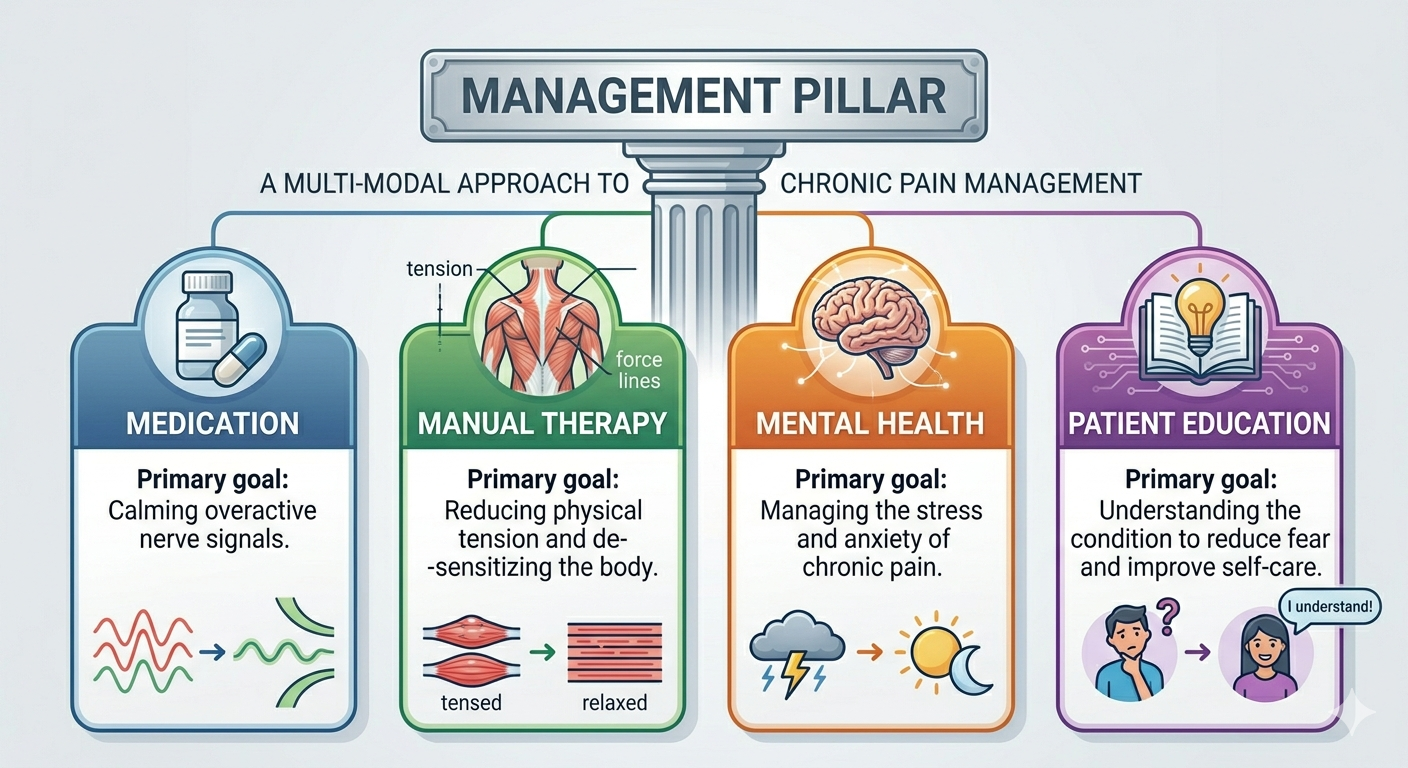
Because chronic pain affects both the physical body and the way the brain processes information, no single treatment is a "silver bullet." The most effective way to manage persistent pain is through an interdisciplinary approach, so that different healthcare professionals can work together to address every angle of the syndrome.
Pharmaco Management: Medical Doctors can use specific medications to "quiet" the overactive pain signals in the brain.
Psychological Support: Living with persistent pain is exhausting and can often lead to anxiety or sleep issues. Working with a mental healthcare practitioner can help patients develop strategies to manage their emotional burden, which in turn can help lower the intensity of the pain.
Specialized Diagnostics: Tools like functional imaging can help the healthcare team see how the brain is reacting to stimuli, allowing for a more accurate and personalized treatment plan.
The Role of Osteopathy in Persistent Pain
While Central Pain Syndrome originates in the brain and spinal cord, it has a profound effect on the muscles and joints. Osteopathy can assist with the pain felt in one’s muscles, joints and tendons through a few mechanisms discussed below. Osteopathy can be an excellent adjunct to any or all of the modalities listed above.
Why is Osteopathy helpful for chronic pain or central pain syndrome patients?
1. "Re-training" the nervous system
Hands-on Osteopathic techniques provide the brain with "safe" sensory input. By applying controlled, non-painful pressure, Osteopaths help the brain relearn that touch does not always equal danger. Over time, this can help lower the nervous system's overall sensitivity.
2. Breaking the cycle of hypertension/ muscle tightness
When a person is in pain, their body naturally tenses up to protect itself. This "guarding" can lead to stiff joints and tight muscles, which then create new sources of pain. Osteopathy can help release this tension, preventing secondary physical problems from making the central pain worse.
3. Restoring movement and empowerment
Chronic pain often leads to a "fear of movement," which causes muscles to weaken and become deconditioned. Osteopaths work with patients to gradually restore mobility in a realistic and safe manner. Load management is essential and requires an individualized approach.
Heads Up Osteopathy treatment in Box Hill South, Melbourne
Every patient is unique and we want to ensure that our patients are reaching their functional targets- from doing up your bra to not having a constant headache. Osteopathy is an active modality and will require consistent work from both patient and practitioner. To create long term change/adaptations, we need consistent deliberate practice that incrementally gets harder as the patient improves. This gradual loading is very important in chronic pain, we need to carefully work below a patients threshold of pain at the same time slowly increasing their capacity.
Osteopathy treatment involves hands-on techniques like gentle articulation, dry needling, active release techniques, counter strain and individualised exercise prescription.
Osteopathy is a holistic approach to patient care informed by evidence, based in anatomy and physiology and guided by osteopathic principles.
Osteopathy plus a healthcare team
The goal of treating Central Pain Syndrome is not just to "fix" a single symptom, but rather to restore a person’s ability to function and enjoy life. By combining medical expertise with psychological tools and the hands-on benefits of Osteopathy, healthcare teams can provide a path forward for those living with persistent pain.