

Do I see a TMJ Osteopath or TMJ Physio?
When searching for a Melbourne based TMJ practitioner the two primary paths for conservative management are a TMJ Physio and the TMJ Osteopath. While they share a common goal—restoring pain-free jaw function—their clinical philosophies and methods of application differ. So who do you see, a Melbourne TMJ physio or Melbourne TMJ Osteo?
(Yes this page was written by an Osteopath but I have much love & respect for my Physio colleagues)
The Shared Foundation of a TMJ Physio or TMJ Osteo: Biomechanics & Evidence
Before diving into the differences, it is important to note that both a jaw Physio and a jaw Osteopath operate from a biomechanical basis. They both analyze how forces are distributed through your joints, muscles, and connective tissues.
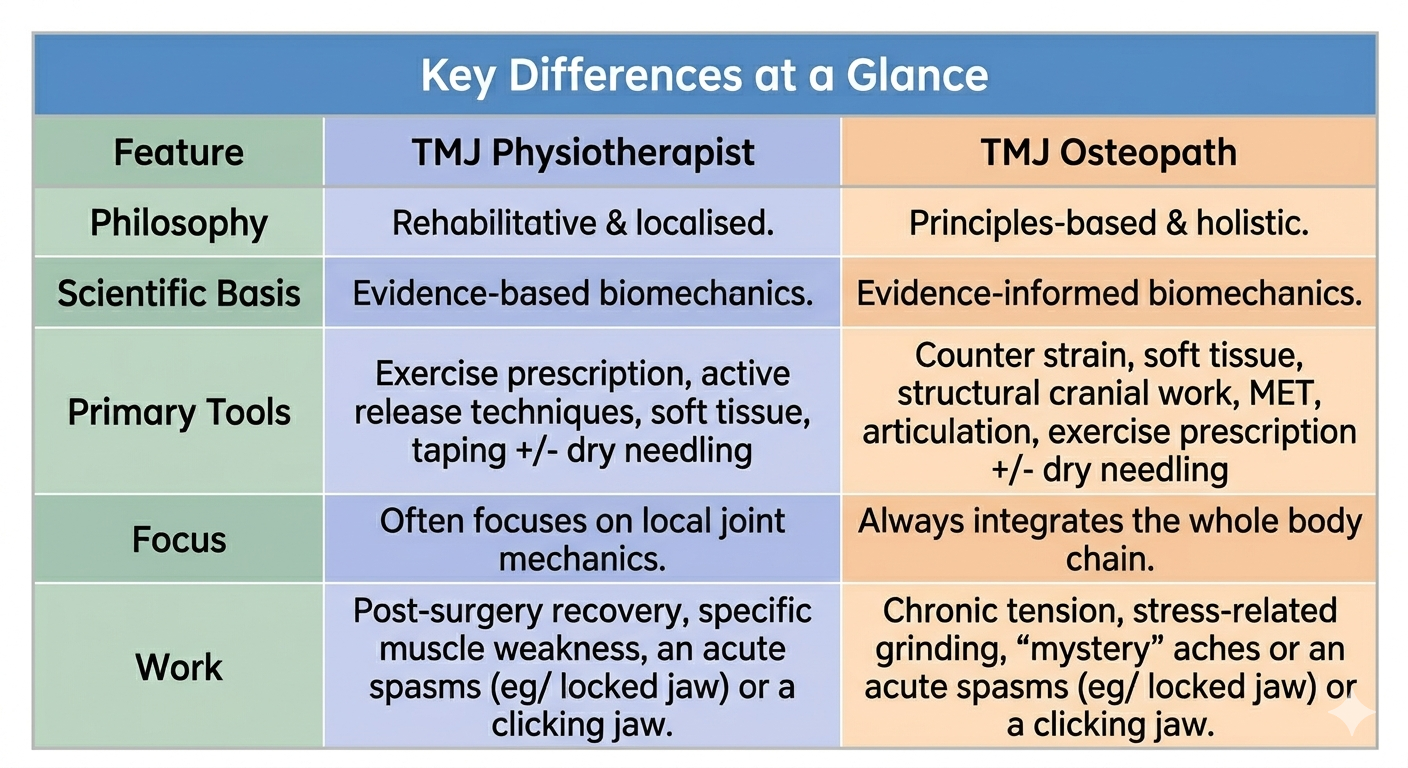
Furthermore, both Osteopathy and Physiotherapy are evidence-informed professions (Physio is evidence based, a notable difference). Both practitioners integrate the latest clinical research with the aim of treatment to be both safe and effective. While their techniques may vary, both disciplines rely on a deep understanding of anatomy and physiology to treat your jaw/ TMJ pain.
The TMJ Physio: The exercise based practitioner with a localised focus
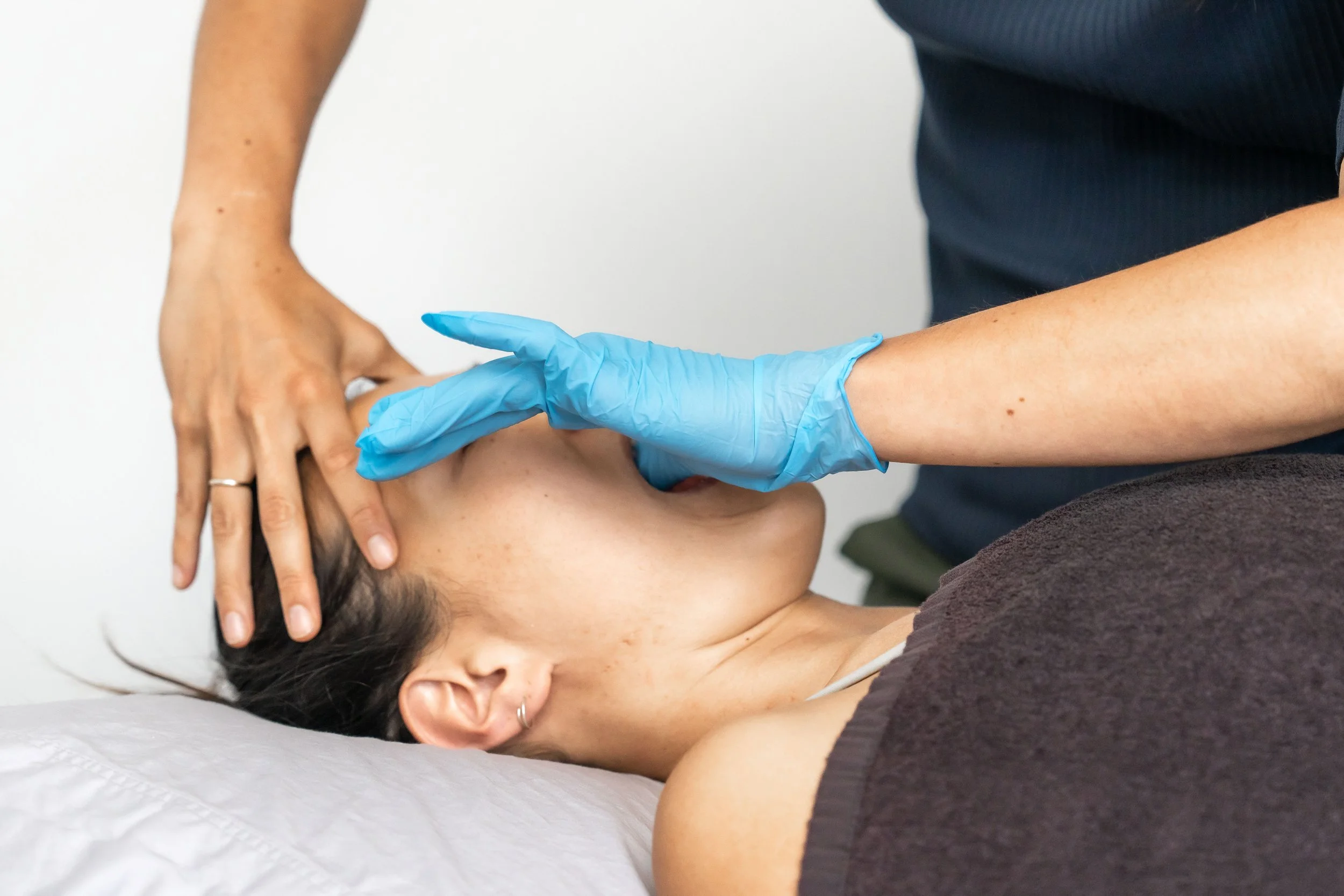
A TMJ Physio typically approaches jaw dysfunction through the lens of methodical rehabilitation and specific localised movement. They may also do some hands-on table base treatment.
The Approach: Highly rehabilitative and exercise-focused.
The Method: A TMJ physio will assess your jaw posture and jaw tracking. Treatment often includes:
Intra-oral soft tissue: Releasing the masseter and pterygoid muscles from inside the mouth. Working methodically through trigger points around the TMJ joint.
Prescribed exercises: Specific resistance movements to "re-train" the jaw.
The TMJ Osteopath: The principle-based practitioner with a global focus
An Osteopath works with the fundamental principle that the body’s structure and function are inter-related. They view the jaw as one component of a continuous mechanical chain.
A TMJ Osteopath would argue that the TMJ joint is more than an isolated joint but rather part of a complex system that connects the jaw bone to the skull. So when the TMJ is dysfunctional the impact can radiate from your cranium (skull), into your neck and perhaps further down into the torso. We would also argue that this can go the opposite way, eg/ neck pain can manifest as jaw pain.
The Approach: Holistic and "whole-body" integration.
The Method: Along with providing symptomatic hands-on relief for one’s jaw pain, A TMJ Osteopath will look beyond the TMJ joint. They will examine how your neck, head, pelvis, ribcage or spine alignment may be influencing your jaw imbalance. Treatment often includes:
Structural articulation: Subtle adjustments to the jaw and cranial bones.
Nervous system regulation: Addressing how the "fight or flight" response contributes to bruxism (grinding).
Myofascial release: Broad stretching of the connective tissues that link the jaw to the neck and chest.
Exercise prescription: Functional and individualised exercises given the patient’s presentation and goals.
Melbourne based TMJ Physiotherapist or Melbourne based TMJ Osteopath?
The Bottom Line: As you can see there is significant overlap between a jaw Physio and a jaw Osteopath, both professions are highly trained primary healthcare practitioners. The best results usually come from the practitioner who performs the most thorough initial assessment of your unique biomechanics and provides you with a realistic treatment strategy.