

Head Over Heels: why your foot health is important for the entire body
We often treat our feet like the "tyres" of a car—useful for getting around, but largely forgotten until there is pain. Helen Halkias, an experienced podiatrist based in Blackburn, explains the foot is less like a tyre and more like the foundation of a skyscraper. If the foundation is tilted or rigid, the penthouse—your head and neck—will eventually feel the strain.
In a recent discussion at Helen Halkias Podiatrist just down the road in Blackburn
the conversation shifted away from generic terms like "over-pronation" toward a more holistic, functional approach to human movement. Here is why the relationship between your feet and your posture is more interconnected than you might think.
The Functional Foot: beyond shape and aesthetics
A "good" foot isn't defined by the height of the arch or the look of the toes. Ahealthy foot is a functional foot and function can be defined by three pillars:
Function = Strength, Adaptability and Comfortable.
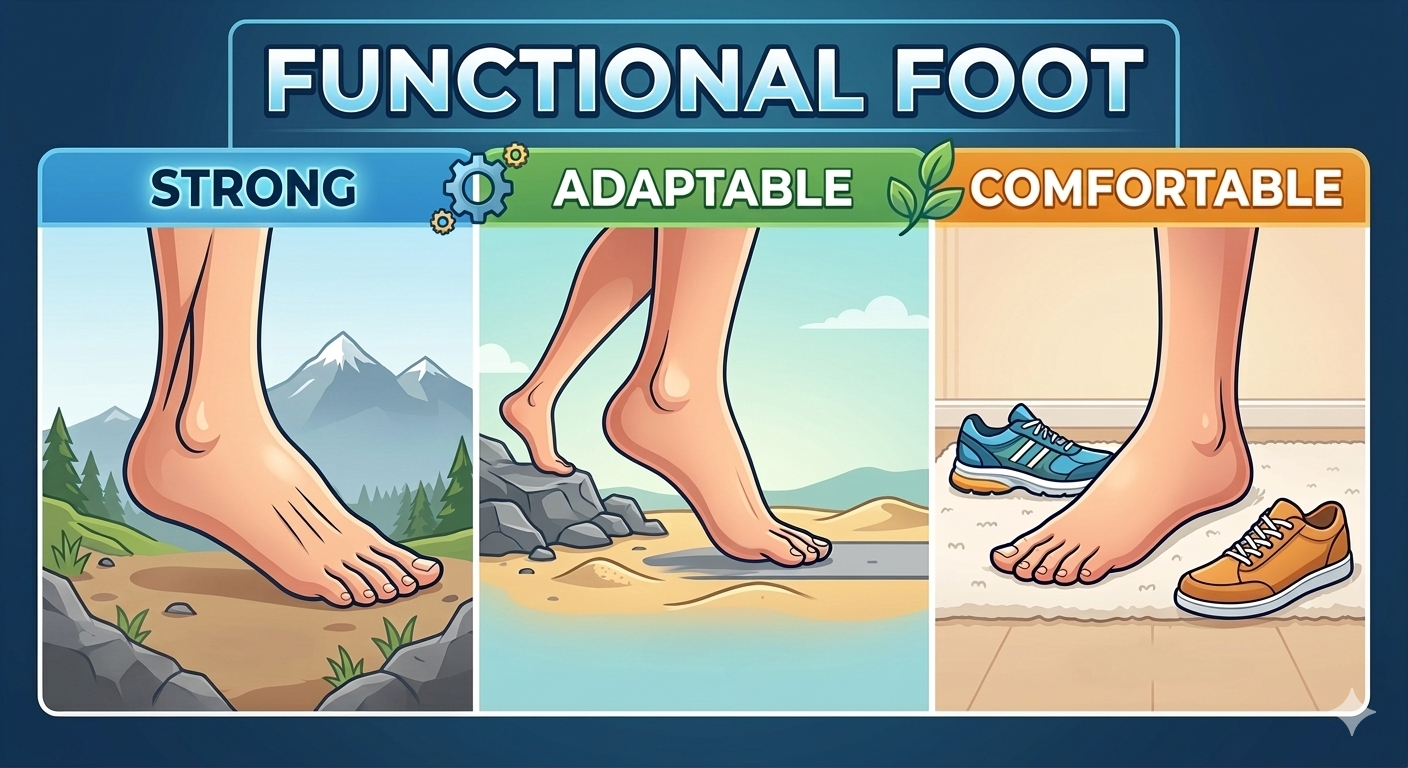
One of the simplest markers of foot strength is the ability to splay your toes. This isn't just a party trick; it’s a sign that you can access the intrinsic muscles—the small muscles contained entirely within the foot. These muscles allow the foot to transition between two vital states:
Pronation/ the foot rolling in. This allows us to absorb shock upon ground contact.
Supination/ the foot rolling out. This allows us to provide a stable platform for propulsion.
The "Foot Tripod": a stable base of support
To maintain stability, the body relies on the Foot Tripod: the base of the big toe, the base of the fifth toe, and the center of the heel. When load is distributed evenly across these three points, the body is "stacked" correctly.
When we introduce a heel lift—even a modest one—that tripod tilts. This shift in the center of mass triggers a chain reaction of compensations up the kinetic chain:
The Knees: To avoid locking or hyperextending, the knees often remain slightly bent.
The Pelvis: A forward-tilted foot leads to a forward tilted pelvis.
The Spine: To compensate for the pelvic tilt, the lower back increases its curvature leading to compression.
The Head: To keep your gaze level while your body tilts, the neck and head recalibrate, which can compress the base of your head.
The Fascial Connection: from the sole of the foot to the eyebrows.
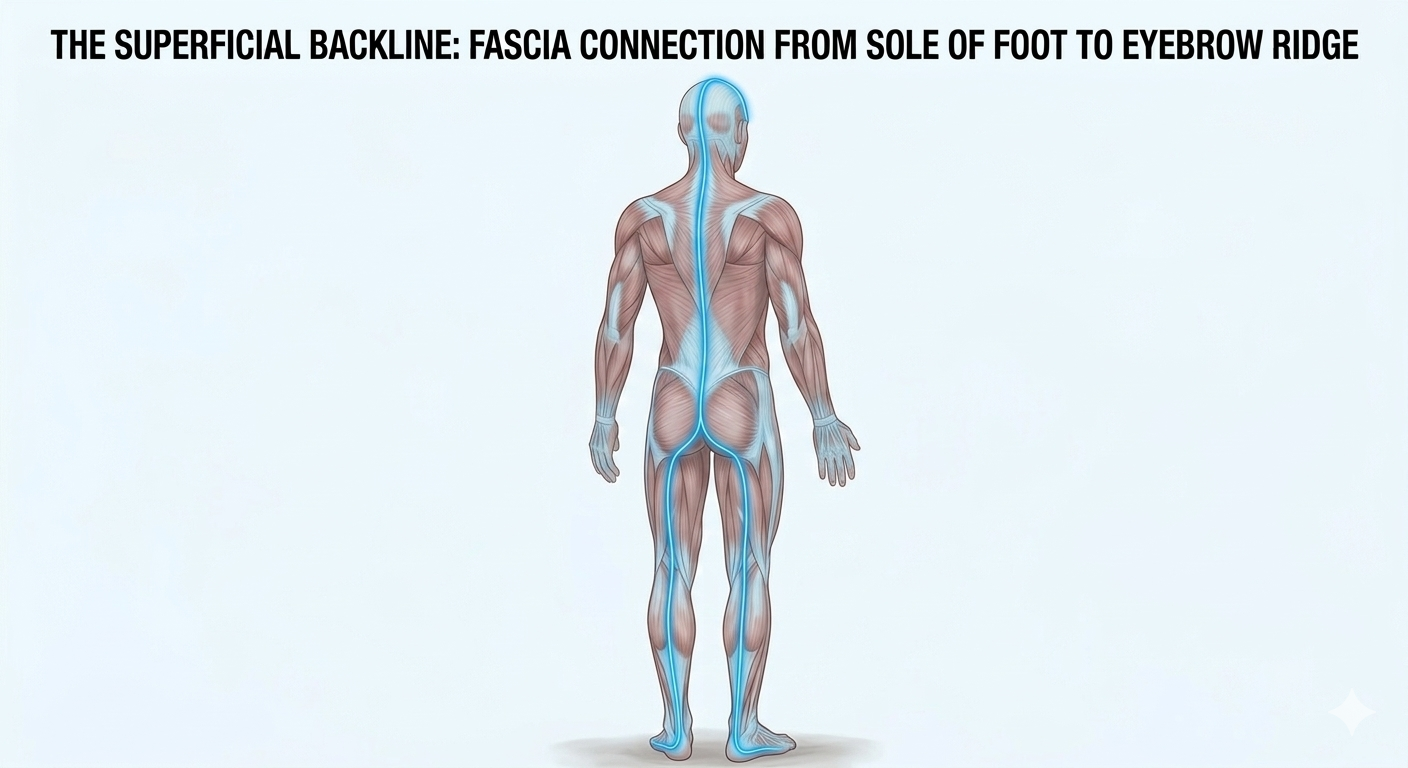
Fascia, the connective tissue that wraps around every muscle and organ, creates continuous "lines" throughout the body.
The plantar fascia on the sole of your foot doesn't end at the heel. It connects into the fascial lines that run up the calves, hamstrings, and back, travelling up the back of the body and head to terminate at the eyebrow ridge. When you are constantly "stuck" in a position with an elevated heel, this entire back line of the body shortens. This can lead to movement restriction and pain in various parts of the body.
The danger of "maximum comfort"
Mainstream footwear is designed for "ease"—think high-stack heights, heavy cushioning, and "rocker" soles that roll you forward. While these are helpful "big guns" for specific injuries or elite performance, using them as a daily baseline can be counterproductive.
"Comfort can be dangerous if it's our baseline. The foot is a major sensory organ designed to feed information to the brain about where we are in space. Constant cushioning numbs that input, leaving the body in a more stressed state."- Helen Halkias
By relying on the shoe to do the work of "toeing off" or absorbing shock, our feet become deconditioned. We lose functional capacity.
Moving toward adaptability
The goal isn't to demonize shoes or demand everyone switch to "zero-drop" barefoot styles overnight. Instead, it’s about building capacity.
If you are used to a 20mm heel, dropping to zero immediately for a long walk is a recipe for a calf strain. The journey toward a stronger foot involves:
Gradual transition: Allowing the posterior chain (calves and Achilles) to lengthen slowly.
Sensory re-engagement: Spending time barefoot to "wake up" the receptors on the soles of the feet.
Simplification: Aiming for a baseline shoe that allows the foot to function as nature intended, saving high-tech features for when they are truly needed.
The Bottom Line: The simpler you keep your footwear for daily life, the stronger your foundation becomes. And a stronger foot inevitably leads to a more resilient body.